
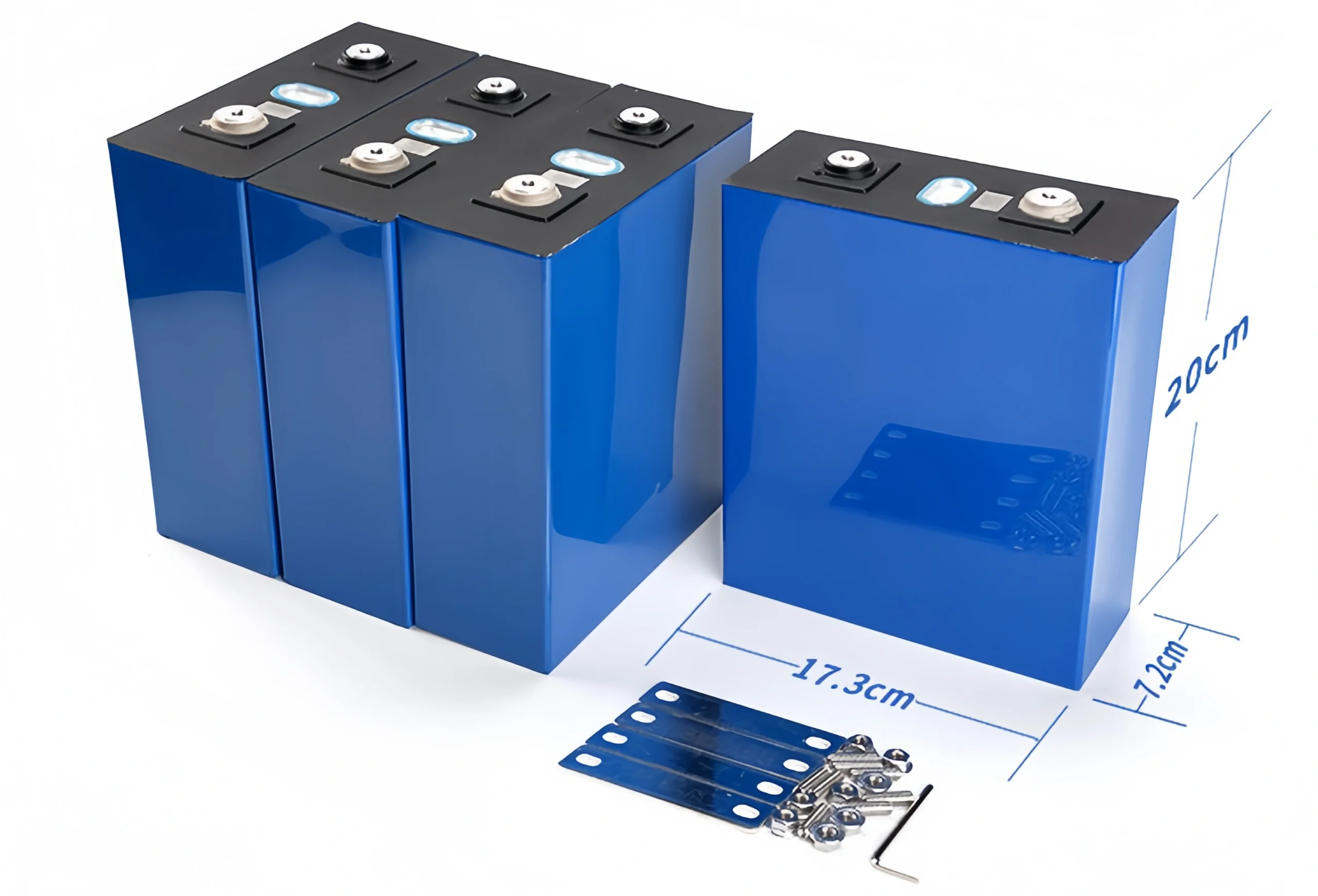
Lishen LP71173207 272Ah: The New Benchmark for Energy Efficiency The Lishen LP71173207-272Ah is a technological powerhouse in the Lithium Iron Phosphate (LiFePO4) landscape. Manufactured by Lishen, a pioneer in lithium-ion research, this Grade A prismatic cell is specifically optimized for high-capacity applications where every watt-hour counts. Its ultra-low internal resistance sets a new standard for cool operation and maximum round-trip efficiency under heavy industrial loads.
Market-Leading Resistance: Boasting an AC impedance of ≤ 0.12 mΩ, the LP71173207 offers one of the lowest resistance profiles in the industry. This results in superior energy efficiency and significantly reduced cooling requirements for large-scale battery banks.
Extreme Arctic Capability: Built for the world’s most challenging environments, this cell is rated to discharge reliably at temperatures as low as -35°C, far outperforming standard LFP cells in winter resilience.
Massive Energy Density: With 272Ah of usable capacity, a standard 16S (48V) configuration delivers a substantial 13.9 kWh of storage, allowing for fewer parallel cells and a simpler, more reliable system architecture.
✅ Verified Grade A Integrity: We supply only 100% original Lishen cells. Every unit undergoes rigorous capacity and internal resistance matching before shipping to ensure your battery pack is perfectly balanced.
🎯 Full Traceability: DLCPO maintains scannable original factory QR codes on every cell. We do not provide relabeled or “hidden” inventory, ensuring you receive authentic, automotive-grade quality.
🌐 Global Logistics Authority: We specialize in professional DDP (Delivered Duty Paid) shipping for heavy-format prismatic cells to the USA, Brazil, and Europe. We manage all complex customs formalities and Class 9 dangerous goods safety protocols for you.
While the 280Ah offers slightly more capacity, the 272Ah model (LP71173207) often features lower internal resistance (≤ 0.12 mΩ) and much better cold-weather discharge specs (-35°C). This makes it the superior choice for high-efficiency solar ESS and applications in freezing climates.
Standard Lishen prismatic terminals require precise torquing to ensure a stable electrical connection. We recommend using a calibrated torque wrench (typically 6-8 Nm for M6/M8) to prevent damaging the aluminum pads while ensuring the ultra-low impedance is maintained. 📐
In regions with harsh winters, standard LFP cells can experience severe voltage sag or shut down entirely. The Lishen 272Ah is engineered to stay operational even in unheated outdoor cabinets, ensuring your backup power is available regardless of the external temperature. 🚀
The Lishen LP71173207 is a professional-grade 272Ah LiFePO4 prismatic cell. Engineered for high-efficiency energy storage, it features a market-leading ultra-low AC impedance of ≤0.12mΩ and exceptional discharge reliability in extreme arctic conditions down to -35°C.
| Parameter | Specification |
|---|---|
| Brand | Lishen (力神) |
| Model Number | LP71173207-272Ah |
| Nominal Capacity | 272 Ah |
| Nominal Voltage | 3.2 V |
| AC Impedance (1000Hz) | ≤ 0.12 mΩ |
| Max. Cont. Discharge (25°C) | 1.0C (272A) |
| Max. Pulse Discharge (60s) | 2.0C (544A) |
| Weight | 5302g ± 100g |
| Cycle Performance | ≥ 3,000 Cycles |
| Operation Temp (Discharge) | -35°C ~ 60°C |
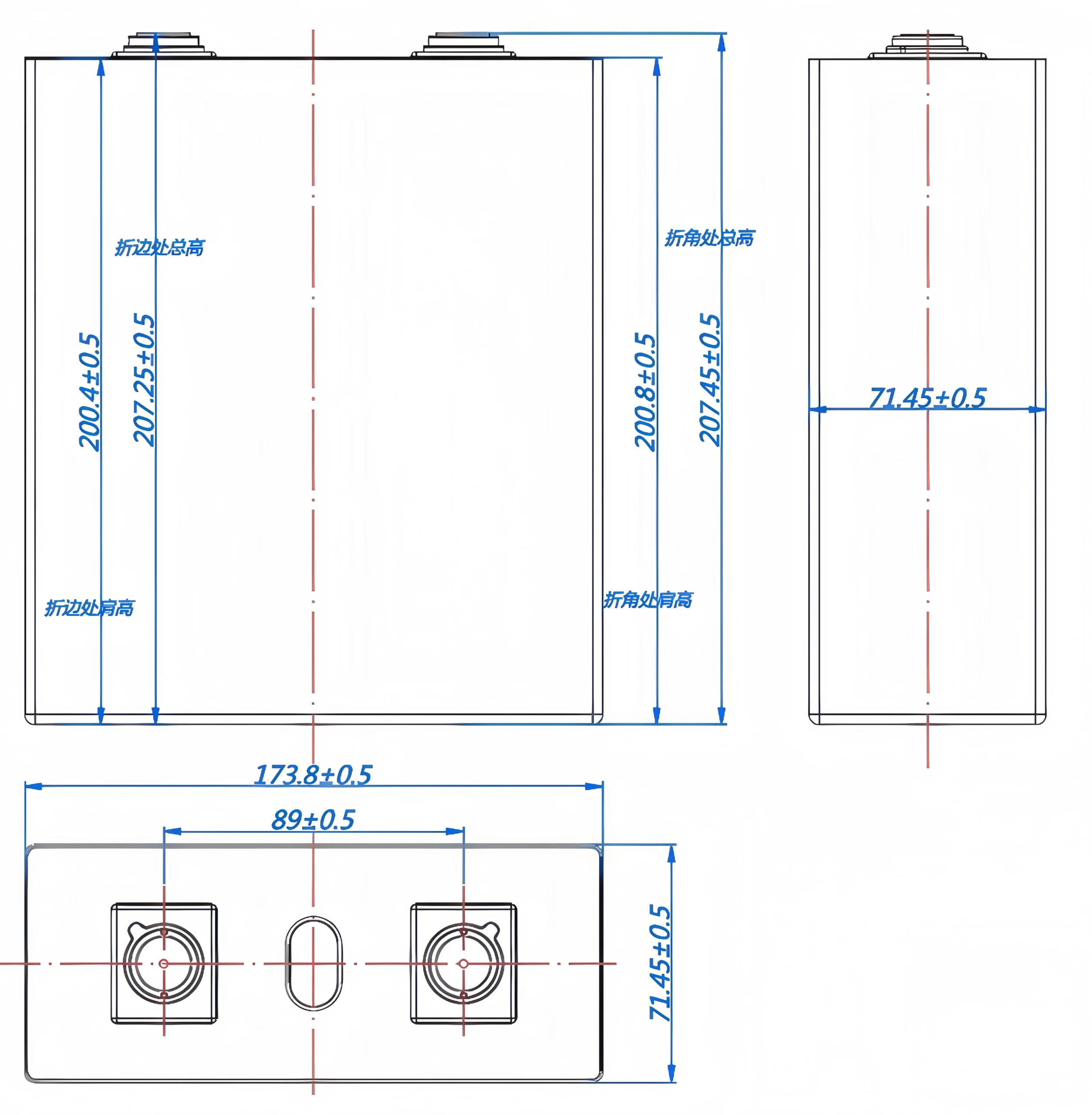
Charge
a) NO over-charge,the charge voltage should not be over 3.65V.
b) NO reverse charging
c) The charge temperature range is 0℃~ 65℃. The charge/discharge must be stopped when any part of the cell reach to 65℃.
d) Optimal charge temperature range is 15℃ ~ 35℃。Do not charge for a long time in the temperature less than 15℃.
Discharge
a) No short circuit
b) The end of discharge voltage must be over 2.0V.
c) The discharge temperature range is -35℃~ 65℃. The charge/discharge must be stopped when any part of the cell reach to 65℃.
d) Optimal discharge temperature range is 15 ℃~ 35℃. Do not discharge for a long time in the temperature more than 35℃
Notice: Cell weighs 5.3kg; use professional structural housing. While discharging is supported down to -35°C, charging must occur in ambient temperatures above 0°C to prevent lithium plating.